What Your Sleep Position Is Doing To Your Body After 50

Updated: 15 hours ago
In my experience working with men over 50, one of the most overlooked sleep factors is something they never even think to mention -- how they sleep. Not what time, not how long. How. The position. And once we address it, things start to change.
By Yakov Moshe Pasner | Restful Sleep Consultant | sleepwithasmile.org

Most of the men I work with have been sleeping the same way for decades. On their back, on their side, on their stomach -- whatever feels natural. And for most of their lives, it probably did not matter much.
But after 50, the body changes. Joints become less forgiving. The airway more vulnerable. The spine needs more support. And the position you sleep in every night can either help your body recover -- or silently work against it.
WHY SLEEP POSITION MATTERS MORE AFTER 50
Time and again, when I ask a new client about waking up stiff, sore, or unrefreshed, we trace it back -- at least in part -- to how they are positioned during the night. Here is what I see happening in men over 50:
Muscle mass decreases, meaning less natural support around joints and the spine. Joints stiffen overnight and poor positioning adds to that. The airway softens with age -- snoring and sleep apnea risk goes up, and position directly affects this. Acid reflux becomes more common, and the wrong sleeping angle makes it worse.
What you could get away with at 30 may genuinely be costing you at 55. I see it all the time.
SLEEPING ON YOUR BACK
Back sleeping is often called the gold standard for spinal alignment -- and in theory, it is. When done correctly, it keeps the head, neck, and spine in a neutral position and allows muscles to fully relax.
But here is what I find in practice: many men over 50 who sleep on their back are also the ones snoring loudly or waking up gasping. When you lie on your back, gravity pulls the tongue and soft tissues of the throat backward, partially blocking the airway. If someone has told you that you snore or stop breathing in your sleep, back sleeping may be making it significantly worse.
Best for: spinal alignment, reducing joint pain. Not ideal for: snorers, men with sleep apnea, acid reflux sufferers. Tip: Use a pillow that keeps your head neutral -- not too high, not flat.
SLEEPING ON YOUR SIDE
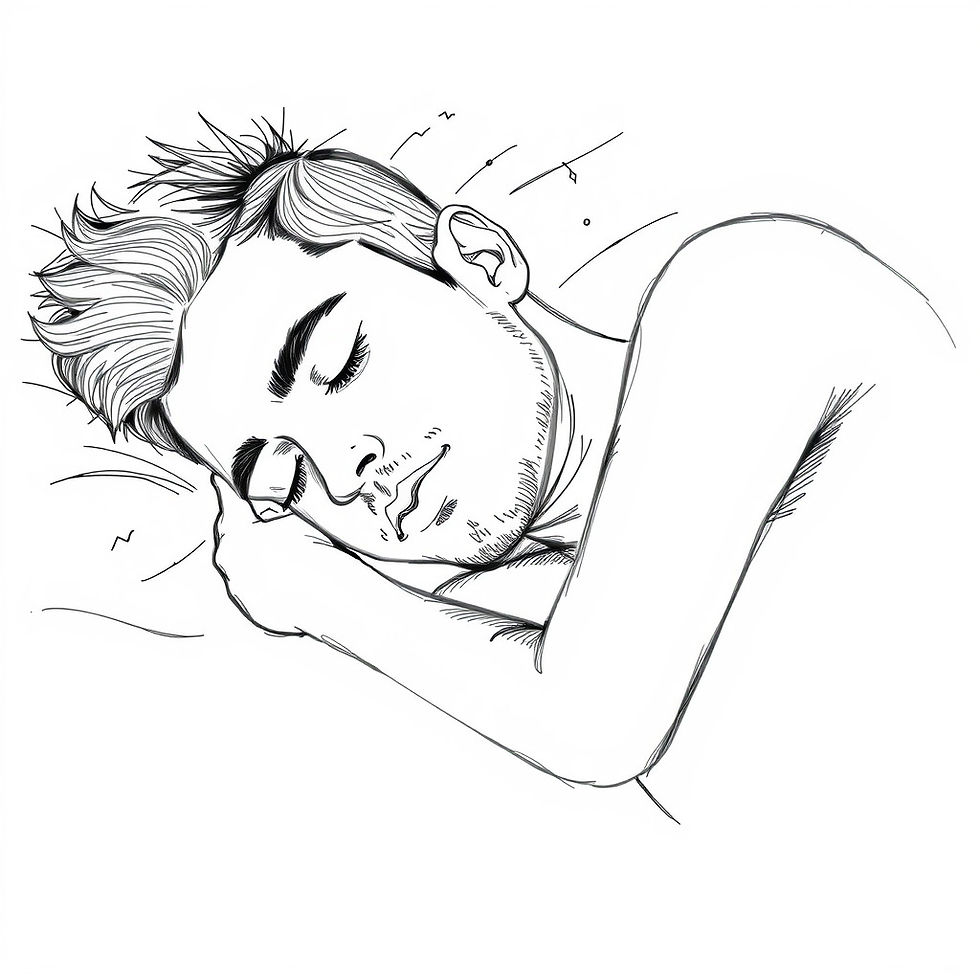
Side sleeping is what I recommend most often to the men I work with. It opens the airway, reduces snoring, helps with acid reflux, and is the position most sleep specialists recommend for men with sleep apnea.
Left versus right matters more than most people realize. Left side sleeping is better for digestion and acid reflux -- the stomach sits lower on the left, so acid is less likely to travel upward. It also supports circulation. Right side can worsen reflux for some men, though it may feel more comfortable for those with certain heart conditions.
The most common complaint I hear from side sleepers: shoulder and hip pain. Usually it comes down to the wrong mattress firmness or the wrong pillow height. A taller, firmer pillow that fills the gap between your ear and shoulder makes a bigger difference than most men expect.
Best for: snoring, sleep apnea, acid reflux, overall sleep quality. Watch out for: shoulder pain, hip pressure, neck strain from wrong pillow height.
SLEEPING ON YOUR STOMACH
This is the one I see causing the most damage -- and the one men are most resistant to changing. Stomach sleeping forces you to turn your head to one side to breathe, which means your neck is twisted for the entire night. Add to that the flattening of the lower back's natural curve, and you have a recipe for chronic pain.
I cannot count the number of men who came to me complaining of neck and back pain who turned out to be lifelong stomach sleepers. Once we addressed the position -- slowly, with some practical strategies -- the pain reduced significantly.
Not ideal for: neck pain, back pain, spinal alignment, nerve compression. Tip: If you truly cannot change, use the thinnest pillow you can find -- or none at all.
HOW TO TRANSITION TO A BETTER POSITION
Changing a lifelong sleep habit is not something that happens overnight -- but with the right tools, it is absolutely possible. Here is what I suggest to my clients:
Use a body pillow. Hugging a long pillow while side sleeping keeps your body from rolling during the night. Place a pillow behind your lower back as a physical barrier. Elevate the head of your bed slightly if acid reflux is an issue -- not just by stacking pillows, but by raising the bed frame itself. And check your pillow height -- this single change has helped more of my clients than almost anything else.

THE BOTTOM LINE
After 50, sleep position is not a minor detail -- it is part of your sleep health. In my work with men over 50, I have seen simple position changes reduce snoring, ease joint pain, improve digestion, and dramatically change how someone feels in the morning.
For most men, side sleeping -- particularly on the left -- is the best overall choice. But the most important thing is that you are sleeping in a position that supports your body, not fights it.
If you are waking up with pain, still tired, or snoring through the night -- your sleep position may be part of the problem. It is rarely the whole story, but it is always worth looking at.
---
I work exclusively with English-speaking men over 50 who are tired of being tired. Through personal one-on-one coaching via Zoom, I help men identify everything that is interfering with their sleep -- position, habits, environment, stress, and more -- and build a practical plan to get back to deep, restorative sleep. You do not have to keep waking up exhausted. Help is one conversation away.
Yakov Moshe Pasner
Restful Sleep Consultant | sleepwithasmile.org | Serving clients worldwide via Zoom


Comments