What Your Snoring Is Actually Telling You: Sleep Apnea Warning Signs for Men Over 50

Updated: 1 hour ago
By Yakov Moshe Pasner | Restful Sleep Consultant | sleepwithasmile.org
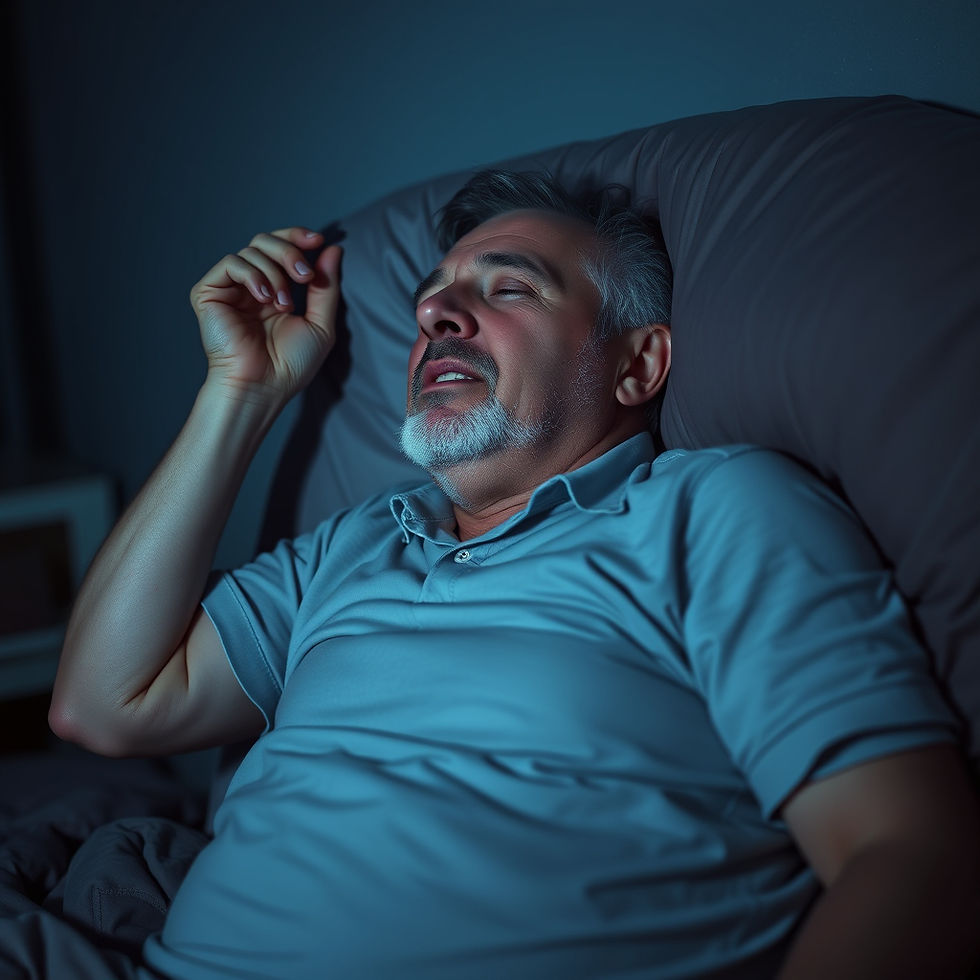
Most men who snore know they snore. Their partners have told them. They have joked about it. They have shrugged it off as an annoyance — maybe even a badge of deep sleep.
But snoring is not a sign of deep sleep. In many cases, it is the opposite — it is a sign that your airway is partially obstructed, your body is working harder than it should to breathe, and your sleep quality is being silently destroyed night after night.
For men over 50, this conversation becomes urgent. Because what starts as snoring can quickly become something more serious.
What Is Sleep Apnea — And Why Should You Care?
Obstructive Sleep Apnea (OSA) is a condition in which the muscles at the back of your throat relax during sleep to the point where they partially or fully block your airway. When the airway closes, your breathing stops — sometimes for 10, 20, or even 30 seconds at a time. Your brain detects the oxygen drop, triggers a brief arousal, and your airway reopens with a snort or gasp. Then it happens again. And again. Sometimes hundreds of times per night.
You may not remember any of these arousals. But your body absolutely feels them. Each one pulls you out of deep sleep, spikes your cortisol and blood pressure, and fragments the restorative rest your body depends on. If you only snore--that is usually symptomatic of a partial congestion of your airway. But if you get more serious Sleep Apnea--then your whole airway--might be blocked.
Sleep apnea is not rare. It is estimated that over 30 percent of men over 50 have some degree of it — and the majority have never been diagnosed.
Warning Signs of Sleep Apnea in Men Over 50
Loud, chronic snoring — especially if it includes pauses, gasps, or choking sounds. Waking up feeling completely unrefreshed, regardless of how many hours you slept. Excessive daytime sleepiness — falling asleep in chairs, during meetings, or while driving. Morning headaches, caused by oxygen deprivation during the night. Waking with a dry mouth or sore throat. Difficulty concentrating or memory problems. Irritability, mood changes, or low motivation. High blood pressure that is difficult to control.
If you recognize three or more of these signs in yourself, it is time to take this seriously — not just for your sleep, but for your cardiovascular health, your brain, and your longevity.
Why Men Over 50 Are at Higher Risk
Several factors converge in men over 50 to increase sleep apnea risk:
Muscle tone reduction. As we age, throat muscles lose tone. This makes airway collapse during sleep more likely.
Weight gain. Excess weight — particularly around the neck and midsection — increases the mechanical pressure on the airway during sleep.
Hormonal shifts. Declining testosterone affects how the brain controls breathing during sleep. Lower testosterone is directly associated with increased sleep apnea severity.
Alcohol and sedatives. Both relax throat muscles further — making apnea significantly worse in men who drink in the evening or use sleep medication.
What to Do If You Think You Have Sleep Apnea
See your doctor and ask for a sleep study referral. Modern home sleep tests are comfortable, non-invasive, and can be done in your own bed. A sleep study is the only definitive way to diagnose sleep apnea and measure its severity.
Do not self-treat with alcohol or sleeping pills. Both worsen apnea significantly. If you are using either to manage poor sleep, this needs to be addressed as part of a broader sleep plan.
Make lifestyle adjustments now. Even before a formal diagnosis, steps like sleeping on your side instead of your back, losing weight if appropriate, cutting evening alcohol, and elevating the head of your bed can meaningfully reduce apnea severity.
If diagnosed, explore your treatment options. CPAP therapy is the gold standard and, when used consistently, produces remarkable improvements in sleep quality, energy, blood pressure, and cognitive function. For milder cases, dental appliances and positional therapy are also effective.

The Sleep Apnea and Heart Connection
Untreated sleep apnea is not just a sleep problem. It is a cardiovascular risk factor. It raises blood pressure, strains the heart, increases the risk of stroke and arrhythmia, and accelerates metabolic dysfunction. Men over 50 with untreated moderate-to-severe sleep apnea have significantly higher rates of heart disease.
This is not something to put off. Your snoring may be telling you something important. It is worth listening.
Need Help Making Sense of Your Sleep?
I work with men over 50 to identify what is actually driving their poor sleep — whether it is apnea, habits, stress, or something else entirely — and build a clear plan to address it. If you have been snoring, waking unrefreshed, or dragging through your days, let us talk.
Yakov Moshe Pasner | Restful Sleep Consultant | sleepwithasmile.org
Serving clients worldwide via Zoom. Helping men over 50 restore deep, natural sleep — one night at a time.
Book your FREE 15-min consultation: https://wa.me/972532488436



Comments